
What Permission Is Required to Cut a Tree in Cape Town?
For an ordinary tree in your own garden, usually nobody. But a verge tree belongs to the City, protected trees like milkwood need a licence, and heritage zones and estate rules can say no. Here's how to check.
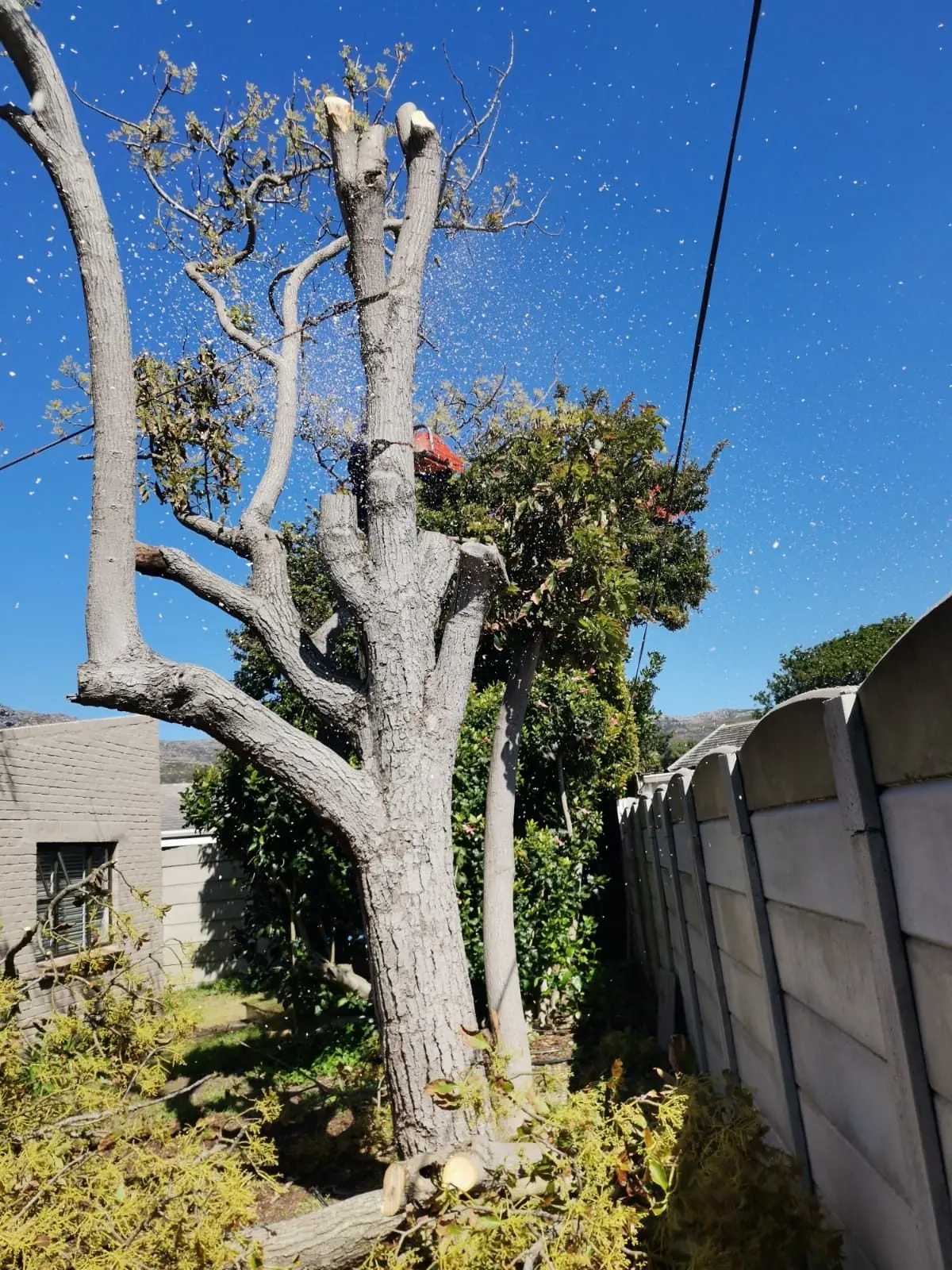
- A tree on the pavement or verge belongs to the City of Cape Town, even outside your gate. Pruning or removing it needs the City's written permission.
- White milkwood is a protected tree. Cutting one needs a licence from the national Department of Forestry, Fisheries and the Environment, even on private land.
- In a Heritage Protection Overlay Zone, removing a tree, a boundary hedge or mature plantings needs the City's approval first.
- For an ordinary garden tree on your own property, such as a pine, gum, oak, syringa or palm, Cape Town tree fellers say no permit is usually needed. Check your title deed and estate rules too.
- Invasive trees such as Port Jackson and rooikrans are the opposite case: landowners are expected to control them.
You've got a tree that has to go, and before you book anyone you want to know: am I allowed to cut it down? In Cape Town the answer depends on whose tree it is and what kind of tree it is. For most trees in most gardens nobody needs to sign anything. For a few, the City or the national government has the final say.
Do you need permission to cut down a tree in your own garden?
Usually not. For an ordinary tree on your own property, such as a pine, a gum, an oak, a syringa, a palm or most ornamental trees, Cape Town tree fellers generally say no permit is needed to fell it. We couldn't find a City of Cape Town page that says so in writing, so treat it as the usual case rather than a guarantee, and run through the four checks below first.
Those four checks are: is it actually your tree, is it a protected species, is your property in a heritage zone, and do your title deed or estate rules say anything about trees?
Who owns the tree on the pavement outside your house?
The City does. Trees on the verge, the pavement and the road reserve belong to the City of Cape Town, even if the tree is right outside your gate and you've watered it for years. Nobody may prune or remove a City tree without written permission from the City's Recreation and Parks Department.
The City removes street trees only for specific reasons: when a tree is an unmanageable risk, when it's dead, or for road or services work. It won't remove a healthy tree just because you'd like it gone.
To ask the City about a street tree, log a service request on 0860 103 089 or at capetown.gov.za/servicerequests.
Is your tree a protected species?
Some trees are protected nationally under the National Forests Act. The Minister publishes a list of protected tree species, and no one may cut, damage or destroy a listed tree without a licence from the Department of Forestry, Fisheries and the Environment (DFFE). That applies wherever the tree grows, your own garden included.
The one you're most likely to meet in Cape Town's northern suburbs is the white milkwood. Milkwoods are one of the trees of the coastal dune bush (Cape Flats Dune Strandveld) that this side of Cape Town is built on, so an old milkwood in a garden near the sea is quite possible. If you're not sure what your tree is, ask before anyone starts cutting.
Is your property in a heritage protection overlay zone?
Parts of Cape Town sit in Heritage Protection Overlay Zones. Inside one, no one may remove a tree, a boundary hedge or mature plantings without the City's approval first. Some areas, such as Bakoven, Clifton and the Glen Beach bungalows, need special consent from the City's Environment and Heritage Management branch.
We didn't find Parklands or Table View in the overlay lists, but zones are mapped property by property. The City's heritage overlay maps will tell you for certain.
What do your title deed and estate rules say?
Private rules can be stricter than the law. In Edgemead, for example, the original title deeds barred owners from removing trees without permission. Many estates and complexes in the northern suburbs also have their own rules about trees, hedges and the look of the garden. If you live in an estate or a sectional title complex, check with the HOA or body corporate before you book the work.
What about invasive trees like Port Jackson?
Invasive trees are the opposite case. Under the national invasive species regulations, landowners must control listed invasive species on their land. Port Jackson and rooikrans, two wattles you'll see on open ground all over the northern suburbs, are on that list. They're trees you're expected to deal with, not ones you need permission to remove.
Whose permission do you need? A quick guide
| Your tree | Whose say-so you need | Who to contact |
|---|---|---|
| An ordinary tree in your own garden | Usually nobody | Check your title deed and estate rules |
| A tree on the pavement or verge | The City of Cape Town, in writing | City service request: 0860 103 089 |
| A protected tree, such as a white milkwood | A licence from the national government | Department of Forestry, Fisheries and the Environment |
| Any tree in a heritage protection overlay zone | The City, before work starts | City Environment and Heritage Management |
| A tree in an estate or complex | Your HOA or body corporate | Your managing agent or trustees |
| Port Jackson, rooikrans and other listed invasives | None: you're expected to control them | No one |
Before you cut: a checklist
- The tree stands inside your boundary, not on the verge or pavement
- It isn't a white milkwood or another protected species
- Your property isn't in a heritage protection overlay zone
- Your title deed, HOA or body corporate rules allow it
- You know what will happen to the stump and the waste
If you can tick all five, you're ready to book. Top Trimmers fells trees across Cape Town's northern suburbs from around R1,500, digs out the stump and takes the waste away at R450 a load. See tree felling, stump removal or, if the tree can stay, tree trimming and pruning. WhatsApp photos of the tree to 071 623 4949 for a free quote.
More questions about tree permission
Do I need permission to prune a street tree in Cape Town?
Yes. A tree on the pavement or verge belongs to the City of Cape Town, and pruning it needs the City's written permission, just like removing it. Log a service request with the City on 0860 103 089 and let the City's Recreation and Parks team deal with it.
How do I know if the tree in my garden is a milkwood?
White milkwoods are evergreen coastal trees, native to the coastal dune bush on this side of Cape Town. If you're not sure, send Top Trimmers a photo of the tree, its leaves and its trunk on WhatsApp before anyone cuts it, and get it identified properly if there's any doubt. Cutting a protected tree without a licence is an offence under the National Forests Act.
Can I have the tree on the verge outside my house cut down?
Not without the City of Cape Town's written permission, because a tree on the verge belongs to the City, even right outside your gate. The City removes street trees only for specific reasons, such as a dead tree or one that's a real risk. Log a service request on 0860 103 089 or at capetown.gov.za/servicerequests.

Top Trimmers
Top Trimmers is a garden and landscaping company in Parklands, Cape Town, owned and run by Tylor Titus since December 2019. The team looks after gardens, trees and grounds across the northern suburbs.
About Top Trimmers →Ready to sort out the tree?
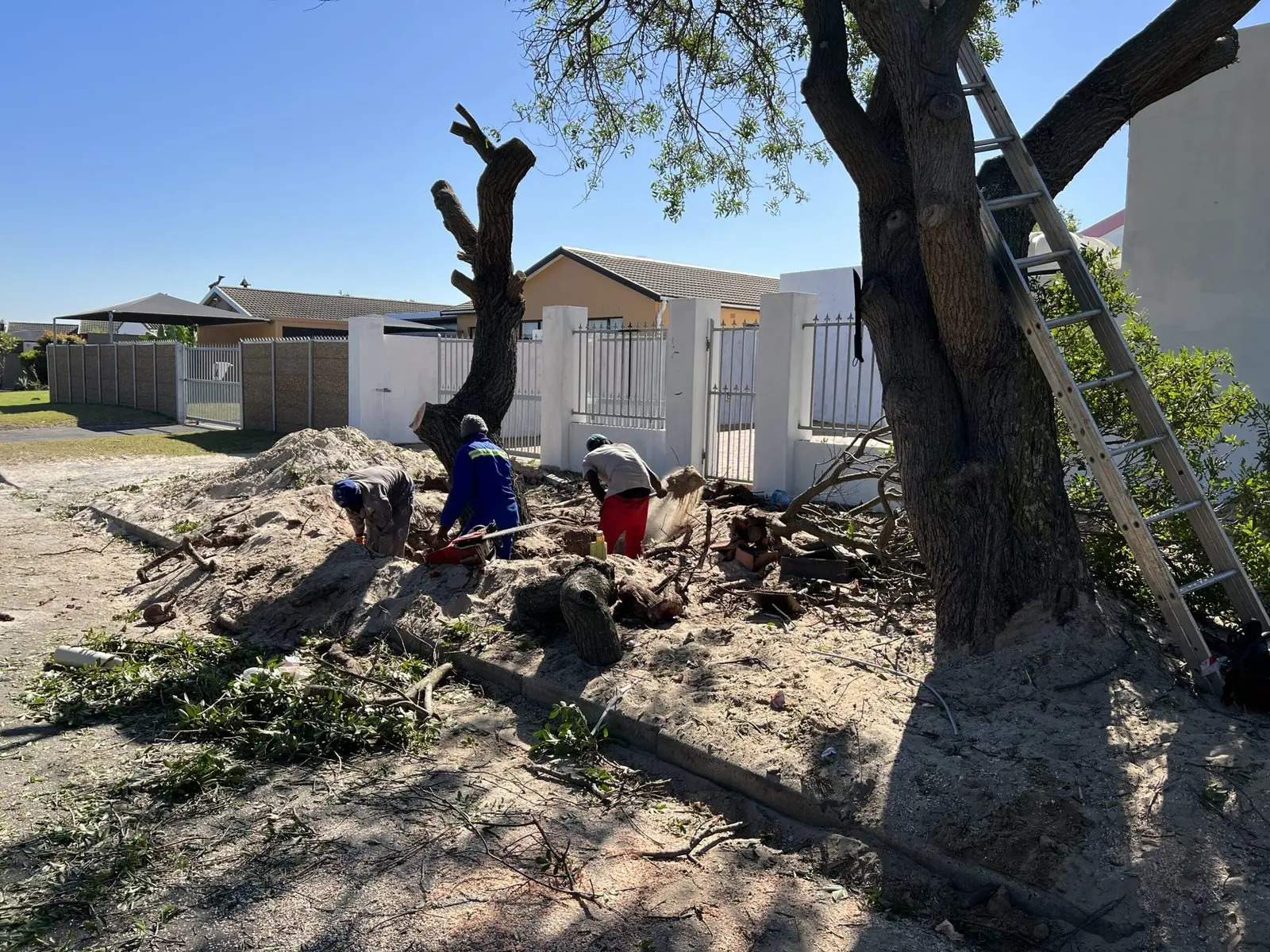 Tree fellingTrees taken down, from around R1,500.Tree stump removalStumps dug out, so the ground can be used again.
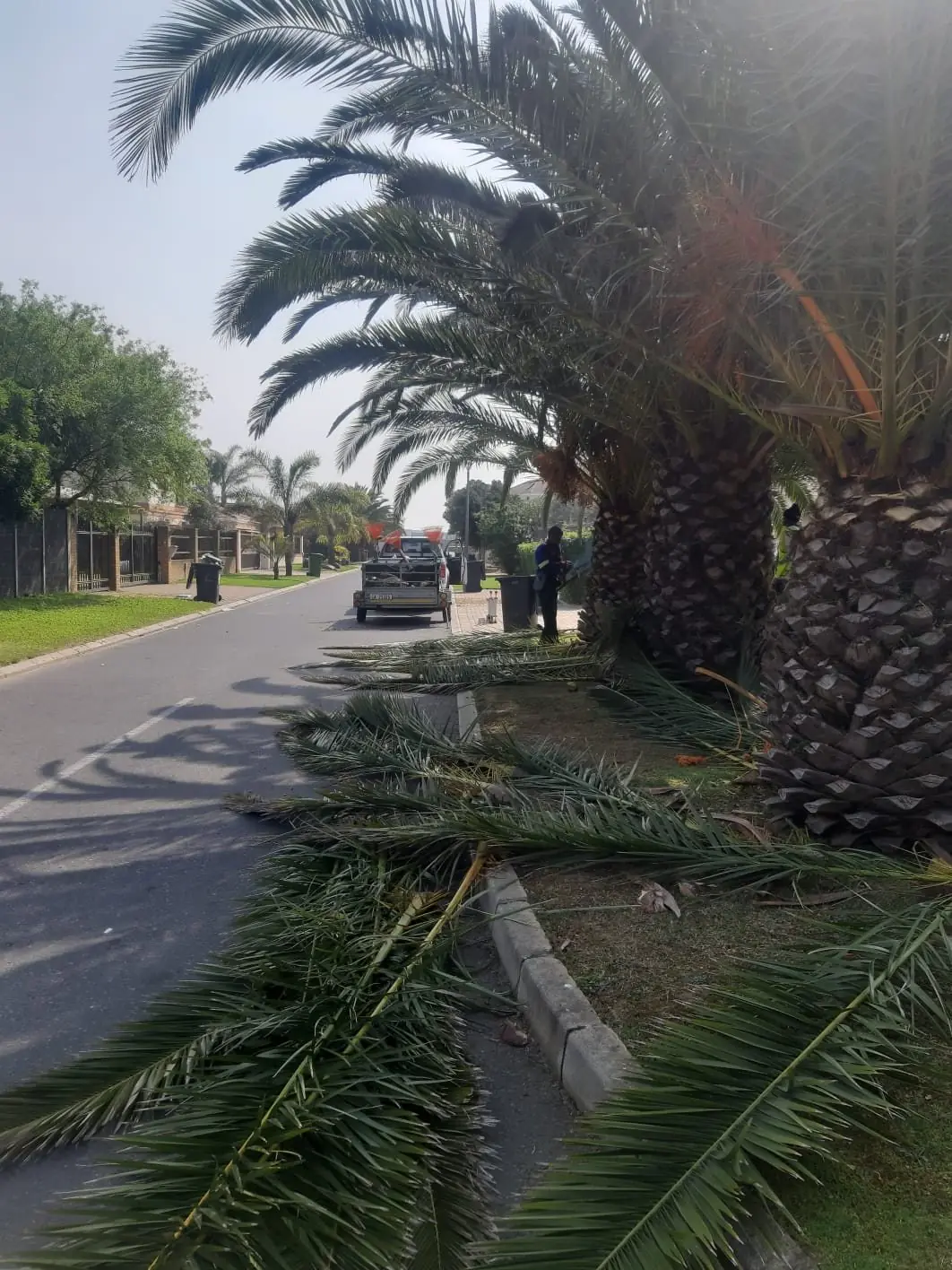 Tree trimming and pruningWhen the tree can stay but needs cutting back.
More to read
Tree checked and good to go?
WhatsApp photos of the tree to 071 623 4949 for a free quote. We reply within 24 hours.